Regulatory Influences on Reward Distributions and Progressive Prize Mechanics Across Licensed Nordic Digital Gaming Platforms
Carlo Powell · Oct 4, 2026
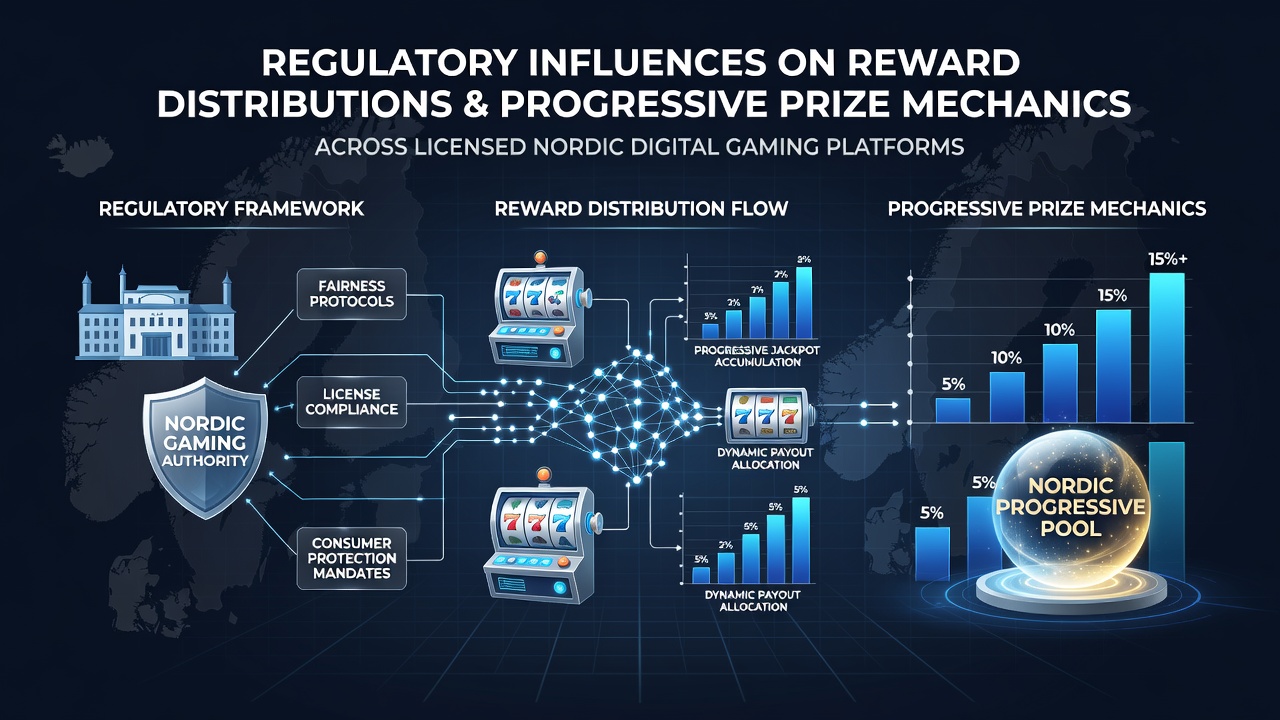
Regulatory Influences on Reward Distributions and Progressive Prize Mechanics Across Licensed Nordic Digital Gaming Platforms
Regulatory frameworks in the Nordic countries shape reward distributions and progressive prize mechanics on licensed digital gaming platforms through licensing conditions, technical standards, and ongoing compliance requirements that operators must meet to maintain their authorizations. Sweden, Denmark, Norway, and Finland each maintain distinct yet overlapping systems that govern how operators calculate, allocate, and display rewards while ensuring progressive jackpots follow transparent contribution and payout rules. Data from national regulators show that these controls affect prize pool accumulation rates, maximum contribution percentages, and eligibility criteria for players across multiple jurisdictions.
Swedish Licensing Requirements and Reward Allocation Rules
Sweden's Spelinspektionen enforces detailed technical standards that limit how operators structure bonus distributions and progressive contributions on licensed platforms. Operators must report reward mechanics in advance, and any changes to progressive prize formulas require prior approval. Figures released by the authority indicate that contribution rates to progressive pools typically range between one and three percent of wagers, with mandatory caps on certain promotional reward types that prevent excessive accumulation outside teh core prize structure. Platforms licensed after 2019 operate under these constraints, which also require clear separation between operator revenue and prize pool funds in real-time accounting systems.
Danish and Norwegian Approaches to Progressive Prize Oversight
Denmark's Spillemyndigheden applies similar oversight through its certification scheme, requiring independent testing of random number generators and progressive prize engines before platforms launch new titles. Norwegian authorities maintain a state monopoly model for many gaming products, yet licensed operators in cross-border segments still follow contribution transparency rules that mirror those in neighboring markets. Research from the Norwegian Institute of Public Health shows that these controls correlate with lower variance in jackpot payout frequencies compared to less regulated environments. Both jurisdictions require operators to publish historical payout data for progressive games, allowing players to review average return percentages over defined periods.
Finnish Regulatory Developments and Cross-Border Alignment
Finland continues to transition toward a more open licensing model while retaining strict rules on reward mechanics that align with broader EU consumer protection directives. In October 2026, updated technical standards are scheduled to take effect that will standardize how progressive prize contributions are calculated across multi-jurisdictional platforms operating in the Nordic market. These changes require operators to maintain separate ledgers for each participating country and to adjust contribution percentages dynamically based on local regulatory caps. Observers note that such alignment reduces administrative complexity for operators while maintaining national control over maximum prize thresholds.
Technical Standards Governing Prize Pool Mechanics
Licensed platforms must use certified software that prevents manipulation of progressive prize growth rates and ensures that seed amounts and contribution formulas remain fixed once approved. External audits verify that jackpot meters display accurate values and that payouts occur within predefined timeframes after wins are confirmed. Industry reports from the European Gaming and Betting Association highlight that these technical requirements have led to standardized APIs for prize pool reporting across Nordic operators, improving regulatory visibility into daily accumulation and distribution patterns.
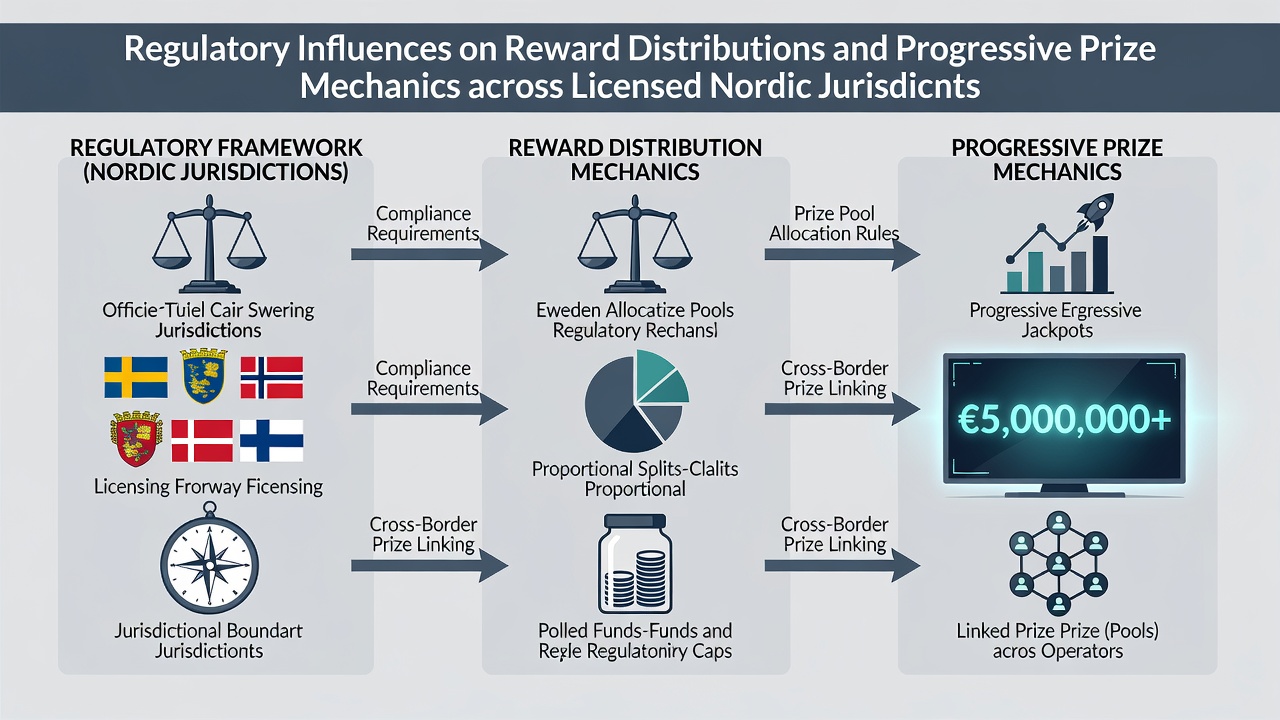
Operators frequently adjust their game portfolios in response to these rules, often limiting certain high-contribution progressive titles in markets with stricter caps. Data indicates that average progressive prize values in Sweden and Denmark have stabilized since the introduction of contribution limits, while payout intervals have become more predictable for players tracking historical trends. Cross-border platforms must reconcile differing national requirements when the same progressive game runs simultaneously in multiple Nordic countries.
Compliance Reporting and Audit Processes
Regular audits form a core component of regulatory oversight, with authorities requiring detailed logs of every reward distribution event and progressive meter movement. Operators submit monthly reports that detail total contributions, payout events, and any discrepancies between projected and actual prize pool balances. A study conducted by researchers at the University of Oslo examined audit data from 2023 to 2025 and found consistent adherence to contribution rate limits across the majority of licensed platforms. These reporting obligations extend to third-party game providers, who must supply verifiable data feeds that regulators can independently verify.
Conclusion
Nordic regulatory systems continue to evolve their treatment of reward distributions and progressive prize mechanics through technical standards, reporting mandates, and scheduled updates such as the October 2026 Finnish changes. Licensed operators navigate these requirements by maintaining certified systems, transparent accounting practices, and real-time compliance monitoring that satisfy multiple national authorities simultaneously. Available data from regulators and academic sources show measurable effects on prize pool behavior and distribution patterns, while ongoing alignment efforts aim to streamline cross-border operations without compromising jurisdictional control.